Hazards
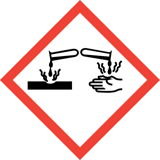


- H290May be corrosive to metals.
- H302Harmful if swallowed.
- H314Causes severe skin burns and eye damage.
- H332Harmful if inhaled.
- H335May cause respiratory irritation.
- H373May cause damage to organs through prolonged or repeated exposure (inhalation).
Full GHS classification
- Corrosive to Metals Category 1 — H290
- Acute Toxicity (Oral) Category 4 — H302
- Acute Toxicity (Inhalation) Category 4 — H332
- Skin Corrosion/Irritation Category 1B — H314
- Serious Eye Damage/Eye Irritation Category 1 (conveyed by H314)
- Specific Target Organ Toxicity (Single Exposure) Category 3 — H335
- Specific Target Organ Toxicity (Repeated Exposure) Category 2 — H373
Poisons schedule
Not Scheduled (SUSMP — none allocated)
Used for
Chelating / sequestering agent; household and industrial cleaning formulations, detergents, pulp and paper bleaching.
Never
Not for domestic / unprotected consumer use. Do not mix with strong oxidising agents.
Transport
- UN number
- 3267
- Proper shipping name
- CORROSIVE LIQUID, BASIC, ORGANIC, N.O.S. (contains tetrasodium EDTA)
- Class
- Class 8 (Corrosive)
- Packing group
- III
- Hazchem
- 2X
Handling
- Appearance
- Clear light-yellow liquid
- pH
- 11.0 – 12.0
- Keep away from
- May be corrosive to metals — avoid copper, aluminium, zinc, copper alloys and nickel. Keep away from strong oxidising agents, heat and foodstuffs (see Section 10).
Also known as
Tetrasodium EDTA solution; EDTA tetrasodium salt 40% liquid; tetrasodium edetate; Na₄EDTA solution
Summary only. The PDF is the Safety Data Sheet: read it before handling, storing or disposing of this product, and keep it with the product.