Hazards
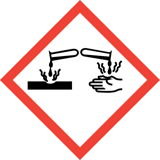


- H290May be corrosive to metals.
- H314Causes severe skin burns and eye damage.
- H410Very toxic to aquatic life with long lasting effects.
- AUH031 — Contact with acids liberates toxic gas.
- H335May cause respiratory irritation.
Full GHS classification
- Corrosive to Metals Category 1 — H290
- Skin Corrosion/Irritation Category 1B — H314
- Chronic Aquatic Toxicity Category 1 (Hazardous to the Aquatic Environment, Long-Term) — H410
- Specific Target Organ Toxicity (Single Exposure) Category 3 — H335
Poisons schedule
S5 (Standard for the Uniform Scheduling of Medicines and Poisons)
Used for
Sanitising agent; bleaching agent; swimming pool and spa disinfectant; water purification; oxidising agent.
Never
Not for use in food, beverage, pharmaceutical or cosmetic applications; not for direct human consumption. Do not mix with acids (liberates toxic chlorine gas) or ammonia/amine compounds.
Transport
- UN number
- 1791
- Proper shipping name
- HYPOCHLORITE SOLUTION
- Class
- Class 8 (Corrosive); Marine Pollutant — see ADG Table 3.2.3
- Packing group
- III
- Hazchem
- 2X
Handling
- Appearance
- Clear yellow / pale yellow-green coloured alkaline liquid with chlorine odour
- pH
- >11.5 (as supplied); approximately 12.5 @ 1% aqueous solution
- Keep away from
- Incompatible with acids (liberates toxic chlorine gas — AUH031), ammonia and ammonium compounds (forms toxic chloramines), reducing agents, organic materials (including amines), metallic powders, heat sources, ethylene diamine tetraacetic acid (EDTA), and metal salts. Avoid contact with formic acid (explosive above 55°C). Store in a cool, dry, well-ventilated area away from direct sunlight. Segregate from incompatible materials per ADG Code segregation rules.
Also known as
Liquid pool chlorine; Liquid Bleach; Labarraque's Solution; Hypochlorite Solution
Summary only. The PDF is the Safety Data Sheet: read it before handling, storing or disposing of this product, and keep it with the product.